
Part of Purr Almighty · the connected feline care networkBoarding operated by Cats in the City
Book or request care

Senior and medication boarding

Slower care. Clear routines. More context.

Older cats and cats on medication may need shorter routes, stable surfaces, accessible litter, appetite protection, predictable handling, and closer attention to small changes that a younger or healthier cat could absorb more easily.

Senior catsOral medicationMobility-aware roomsAppetite observationCase-by-case location review

Boarding requests, availability, current rates, and care approval are managed by Cats in the City.
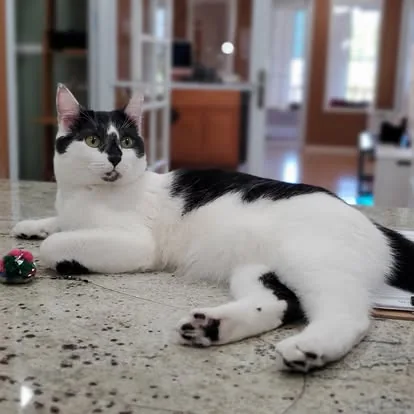
Cat resting in a quiet private studio-style boarding room
AgeIs not a planCurrent function and stability matter more than the birthday alone.
SmallChanges matterSubtle shifts in appetite, gait, litter, rest, or breathing deserve context.

What senior care watches

The baseline can change across several systems at once.

A senior stay should make everyday function visible rather than assuming a completed medication equals a stable cat.

01

Appetite

Interest, approach, texture, and return

Senior cats may eat smaller amounts, prefer specific textures, or lose appetite quickly when routine changes.

02

Hydration

Water interest and elimination context

Drinking behavior, urine output, stool, hydration concern, and food moisture can become more important during transition.

03

Mobility

Effort, hesitation, and access

The team watches gait, jumping decisions, stair use, litter entry, posture changes, and whether the room route is too demanding.

04

Medication

Timing plus tolerance

Delivery method, food relationship, resistance, stress, swallowing, and recovery matter around the prescribed task.

05

Respiration

Breathing at rest and after care

Changes in respiratory effort, rate, posture, or recovery require attention and may exceed routine boarding support.

06

Cognition and senses

Orientation in a new layout

Blindness, deafness, cognitive change, or reduced vision may require stable placement, predictable approach, and lower startle routines.
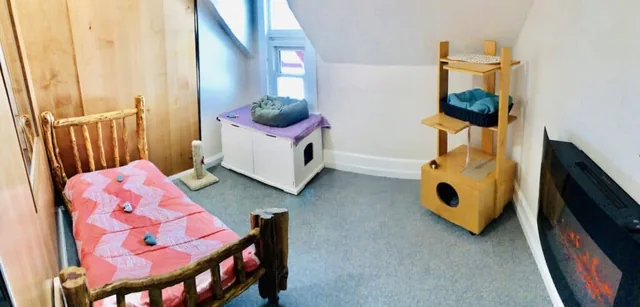
Private master bedroom with multiple resting and retreat options
The useful room is the room the current cat can navigate without unnecessary effort.

Room fit for older cats

Accessibility can matter more than stimulation.

A senior cat may benefit from a quiet, uncomplicated room with short routes among bed, food, water, and litter. High shelves and complex climbing structures may be useful for one cat and unsafe or exhausting for another.

Describe what the cat can do comfortably at home, not what the cat used to do. Mobility, fall history, litter-box entry, preferred sleep position, and pain signs help the team evaluate the room.

Medication preparation

Make the routine reproducible

Do not rely on memory at drop-off. Prepare the medication plan before the travel day.

Use original labels

Bring medication in current prescription packaging with the cat’s name, drug, strength, route, and instructions visible.

Write the real home method

Describe how the cat actually receives the medication: food, treat, capsule, liquid, transdermal, injection, inhaler, or another prescribed route.

Name the success criteria

Explain whether a swallowed tablet must be confirmed, how long transdermal contact is needed, or what behavior shows the dose was lost.

Describe refusal and recovery

Tell the team what resistance looks like, what should stop an attempt, how quickly the cat normally recovers, and what alternative is veterinarian-approved.

Provide enough plus a buffer

Send sufficient medication and supplies for the full stay with a reasonable additional amount in case travel plans change.

Confirm escalation contacts

Provide reachable guardians, the prescribing veterinarian, an emergency clinic preference, and any financial or care authorization instructions.

Location routing

Match monitoring needs to operational capacity.

Medical complexity can change the appropriate location even when a cat has boarded elsewhere before.

Sellwood: advanced medical and overnight on-campus support, generally preferred for higher-frequency observation, complex senior profiles, or overlapping conditions.

Mt Tabor: stable medication or special-needs routines may be approved when monitoring frequency and current presentation fit the location.

Approval is case specific.

A diagnosis list cannot substitute for current records, present stability, and a clear plan for what happens if the cat changes.

Care boundary: Portland Cat Boarding and Cats in the City provide boarding, observation, medication support, and guardian/veterinary coordination. Boarding does not replace diagnosis, emergency care, or treatment by a licensed veterinarian. Every medical boarding request is reviewed for fit and current stability.

Questions

Senior and medication boarding

Clear answers before you request care.

Can any senior cat board?

Age alone does not determine fit. The review considers current stability, appetite, hydration, mobility, elimination, respiratory status, medication, cognition, handling tolerance, and the likely impact of transition.

Can you give oral medication?

Medication support may be available when the routine, handling method, timing, and current stability fit the accepted care plan. The medication must be prescribed and clearly labeled.

What if my cat needs fluids or injections?

Submit the exact prescribed routine and recent records. Approval depends on procedure, frequency, handling tolerance, staffing, and location capacity.

Which location is best for a medically complex senior?

Sellwood generally carries the highest monitoring and escalation capacity. Stable needs may sometimes fit Mt Tabor. Cats in the City makes the final location decision after review.

How should I prepare a mobility-limited cat?

Describe the home setup, preferred litter box, step height, fall risk, resting surfaces, pain signs, and any assistance the cat accepts. Bring familiar supplies when requested.

Describe the cat as they function now.

Send recent records, current medication, appetite, mobility, elimination, respiratory baseline, sensory changes, and the home care method so Cats in the City can review fit.

Need-specific senior pathways

Age is context, not a single boarding profile.

Use the condition guides that match the senior cat’s actual function and care plan.

M

Movement

Arthritis and mobility

Match litter, food, rest, room routes, handling, and pain plans to current function.

Open mobility guide
Rx

Medication

Multiple medications

Create one readable schedule with timing, routes, contingencies, and supplies.

Open medication guide