
Litter
Entry and posture must be workable
Box height, distance, surface, turning room, frequency, accidents, and constipation or urinary history affect setup.
Mobility-aware room matching
Arthritis, weakness, old injury, amputation, obesity, balance change, or age-related mobility limits affect litter access, food placement, rest, temperature, handling, and room routes.
Current availability, rates, policies, and final care acceptance are managed by Cats in the City.
What changes the care plan
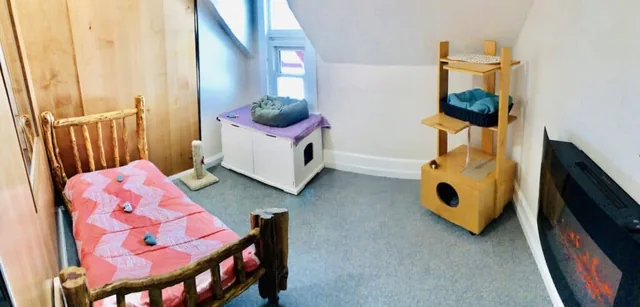
Mobility-limited cats may fit either location. Choose by accessible room layout, care needs, medical stability, household grouping, and how much jumping or stair use can be avoided.
Litter
Box height, distance, surface, turning room, frequency, accidents, and constipation or urinary history affect setup.
Rest
Floor-level, low-step, supportive, warm, and separated resting options can reduce repeated difficult movement.
Handling
Lifting, medication, grooming, carrier transfer, and touch should respect painful joints and current strength.
Connected guidance
These pages answer adjacent questions and route operational decisions back to Cats in the City.
Related guide
Filter lower-demand and vertical rooms.
Open guideRelated guide
Connect age, medication, cognition, and appetite.
Open guideRelated guide
Plan room mapping and movement together.
Open guideQuestions guardians ask
Care fit is confirmed only after Cats in the City reviews the complete profile and requested dates.
No. A larger room may increase travel between resources. The right layout keeps essential needs accessible while still allowing voluntary movement.
Ask Cats in the City about current policy and sanitation requirements. Share the cat’s most useful resting setup.
Report changes in jumping, stairs, grooming, posture, litter use, touch tolerance, social behavior, appetite, and sleep.
Next step
Share the dates, routine, health history, appetite pattern, medication needs, and room priorities. Cats in the City will review the request and confirm the appropriate location and pathway.