
Individual
Every cat needs a separate baseline
Food, litter, medication, mobility, handling, health, appetite, and stress patterns should be documented independently.
Household-level care planning
Cats who live together may be bonded, tolerant, avoidant, competitive, or dependent in different combinations. Boarding should not flatten the household into one personality.
Current availability, rates, policies, and final care acceptance are managed by Cats in the City.
Planning principles
Preparation should reduce uncertainty for the cat, guardian, and care team without pretending every transition can be made invisible.
Individual
Food, litter, medication, mobility, handling, health, appetite, and stress patterns should be documented independently.
Relationship
Who sleeps together, eats together, blocks resources, follows whom, or needs distance can change the room plan.
Rooms
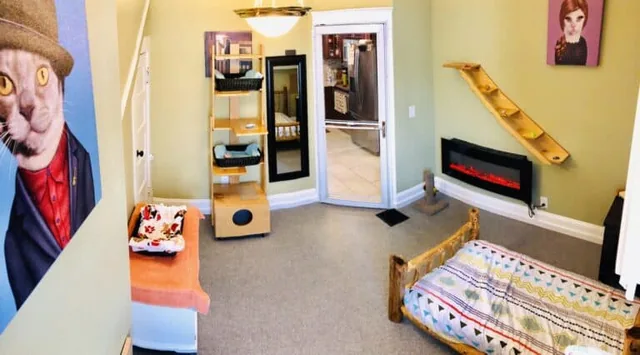
Some households need one large room; others need adjacent or separate territory so individual intake and safety remain clear.
Continue planning
Follow the pathway that matches the cat rather than reading the entire website in sequence.
Related guide
Plan shared territory for a close pair or group.
Open guideRelated guide
Compare family-size rooms and room features.
Open guideRelated guide
Consider home care for complex household dynamics.
Open guideQuestions guardians ask
Care fit is confirmed only after Cats in the City reviews the complete profile and requested dates.
Sometimes. The decision depends on relationship, room size, feeding, medication, litter, medical needs, and safety.
Separate secure carriers generally preserve safe transport and individual identification. Confirm current Cats in the City guidance.
Disclose the pattern. Boarding transition can amplify competition, so the room and separation plan should anticipate it.
Next step
Share the dates, routine, health history, appetite pattern, medication needs, and room priorities. Cats in the City will review the request and confirm the appropriate location and pathway.