
Relationship
Describe how the bond functions
Proximity, grooming, play, feeding, sleep, conflict, stress response, and separation history reveal what “bonded” means in practice.
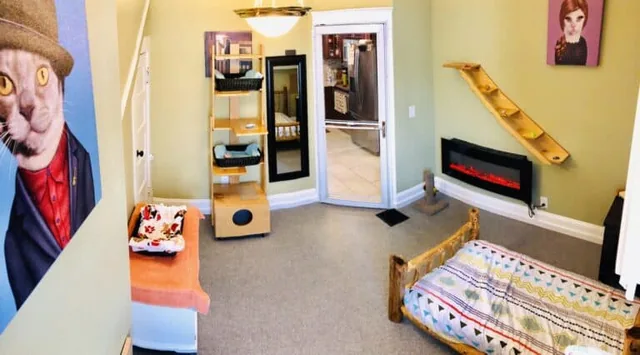
Multi-cat room planning
Bonded cats may sleep, groom, play, or seek reassurance together, but they still need enough space and resource placement to eat, eliminate, rest, and withdraw without conflict.
Current availability, rates, policies, and final care acceptance are managed by Cats in the City.
Planning principles
Preparation should reduce uncertainty for the cat, guardian, and care team without pretending every transition can be made invisible.
Relationship
Proximity, grooming, play, feeding, sleep, conflict, stress response, and separation history reveal what “bonded” means in practice.
Resources
Food, water, litter, rest, elevation, and hiding may need separation even when cats prefer the same room.
Space
The goal is not luxury; it is enough territory for voluntary closeness and voluntary distance.
Continue planning
Follow the pathway that matches the cat rather than reading the entire website in sequence.
Related guide
Filter larger and bonded-family rooms.
Open guideRelated guide
Plan cats who may not share one room.
Open guideRelated guide
Keep individual observations legible.
Open guideQuestions guardians ask
Care fit is confirmed only after Cats in the City reviews the complete profile and requested dates.
Shared boarding is planned when appropriate, but safety and individual care access come first. The team may need to adjust resources or separation if behavior changes.
Current rates and room policies are maintained on the Cats in the City rates and locations page.
Yes, but the feeding plan must make individual intake verifiable and prevent unsafe food sharing.
Next step
Share the dates, routine, health history, appetite pattern, medication needs, and room priorities. Cats in the City will review the request and confirm the appropriate location and pathway.