
Bandwidth
Play requires spare capacity
Running, pouncing, climbing, and tracking require attention and physical availability that may disappear when the cat is tightly monitoring threat.
Expression and recovery
When a cat no longer needs every available resource for vigilance, the body may spend energy on reaching, climbing, chasing, investigating, grooming, stretching, and social engagement.
Boarding requests, availability, current rates, and care approval are managed by Cats in the City.
Core principles
See why voluntary play, climbing, reaching, exploration, and re-engagement can be meaningful signs of safety during feline boarding.
Bandwidth
Running, pouncing, climbing, and tracking require attention and physical availability that may disappear when the cat is tightly monitoring threat.
Initiation
The team creates opportunities but does not use play to push the cat through fear. The cat’s initiation, pause, and return are part of the meaning.
Intensity
Teeth, grabbing, kicking, speed, and hard focus may be normal within chosen play. The entire body and recovery pattern determine interpretation.
Exploration
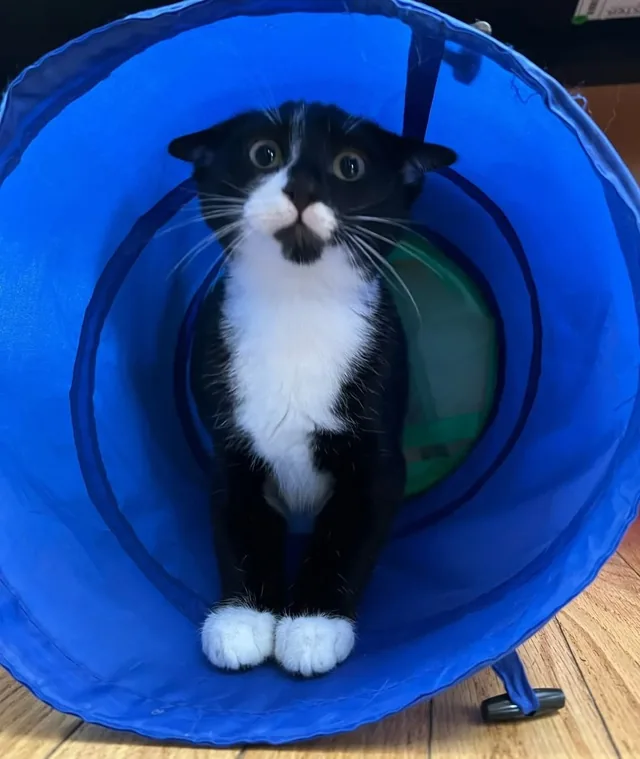
Entering a tunnel, stepping onto a stair, approaching a window, or inspecting an object shows how the cat is mapping the environment.
Interruption
A cat may startle or pause. How quickly the cat returns to the activity—or chooses a different regulated behavior—can be more informative than the startle itself.
Individuality
Some cats show stability through rest, appetite, grooming, observation, or contact. Play is one channel of expression, not a universal test.
Environmental invitation
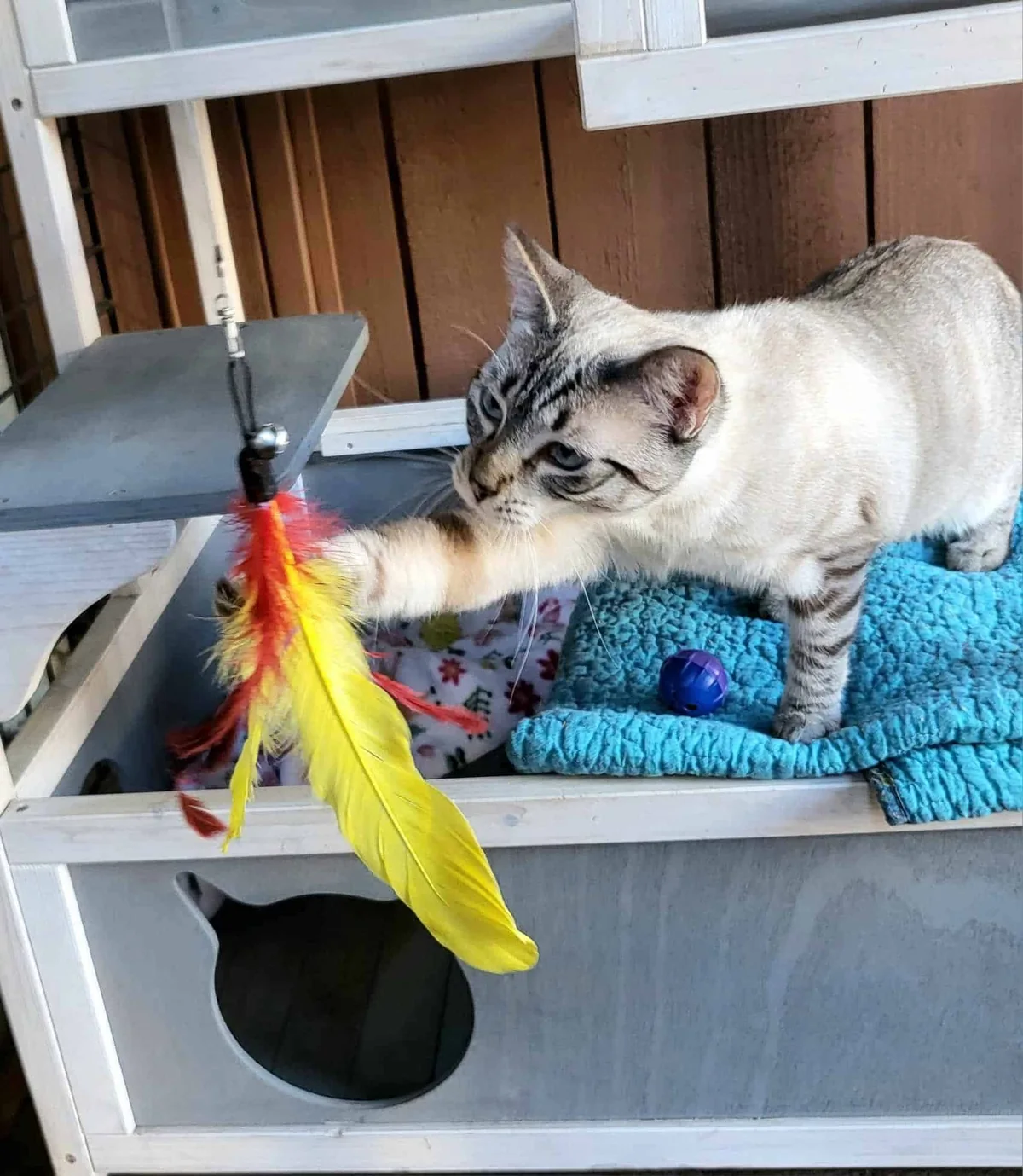
Tunnels create cover and speed. Stairs create threshold decisions and vertical movement. Aquariums offer sustained visual interest without loud novelty. Catios add scent and air while preserving enclosure.
The goal is to make multiple regulated behaviors possible. The cat decides which invitation to use and when.
Play is not an amenity added after care. It can be information about how much of the cat is available.
Submit the Cats in the City request with your cat’s baseline routines, known stress signs, appetite patterns, medical needs, and room preferences.