
Part of Purr Almighty · the connected feline care networkBoarding operated by Cats in the City
Book or request care

TANDEM Cat® boarding framework

Read the stay as a transition.

The TANDEM Cat® Transitional Care Model organizes the boarding experience into observable phases without assuming that every cat follows a neat linear path. It keeps activation, appetite, environment, handling, settling, interruption, and return home in one frame.

Arrival baselineActivationOrientationStabilizationInterruption and recoveryRe-entry home

Boarding requests, availability, current rates, and care approval are managed by Cats in the City.
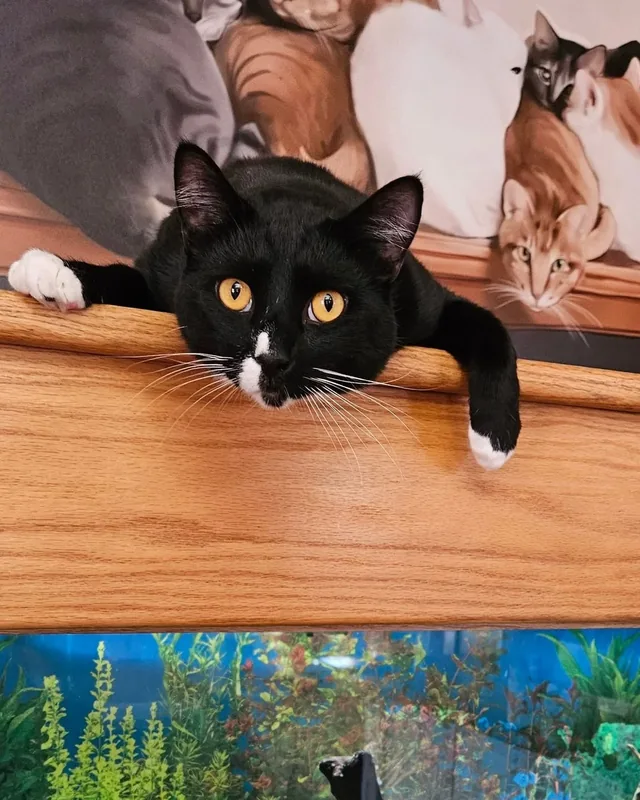
Cat orienting to an aquarium in a private boarding room
NonlinearCats can move forward, pause, or regress after a new demand.
Baseline firstChange only makes sense when the usual cat is described accurately.

The phases

A practical map of the stay

The phases are not grades. They help the team and guardian describe what is happening and decide whether the cat is adapting, conserving, destabilizing, or recovering.

01

Pre-arrival baseline

Food routines, medication, elimination, mobility, handling tolerance, social preferences, sound sensitivity, prior boarding response, and known stress signs are documented.

02

Arrival and activation

The cat enters a new sensory field. Scanning, vocalizing, freezing, hiding, rapid movement, guarded posture, or reduced food interest may appear.

03

Orientation and control

The cat begins mapping food, litter, rest zones, people, height, cover, windows, and routes. Small decisions show whether the room is becoming legible.

04

Routine and stabilization

Eating, elimination, medication tolerance, sleep, grooming, movement, observation, or social engagement become more predictable within the new environment.

05

Interruption and recovery

Cleaning, handling, medication, a sound, a new person, or a room change may reactivate the cat. Recovery toward baseline activities becomes the key signal.

06

Pickup and re-entry home

The cat leaves the boarding rhythm and re-enters the home environment. Guardians observe appetite, elimination, rest, social behavior, and recovery without demanding immediate normality.

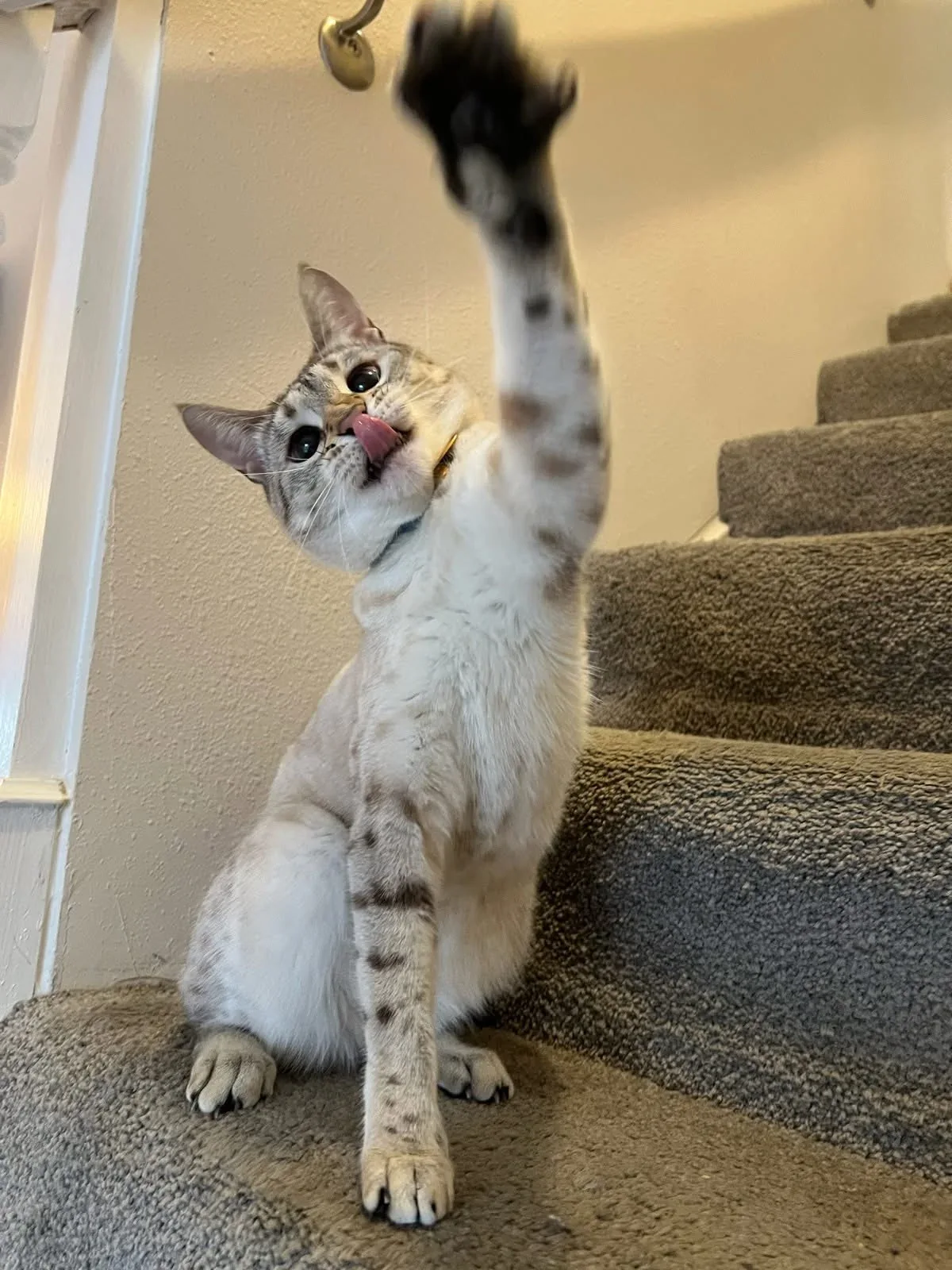
Cat re-engaging with movement during boarding
Re-engagement after interruption can be more informative than a single calm moment.

Why nonlinear matters

A cat can look settled and still lose capacity after a new demand.

Boarding observations are often flattened into “doing well” or “not doing well.” The transitional model keeps the sequence visible. A cat may eat, then stop after medication. Another may hide, then emerge after the room quiets. A third may play and still need extra appetite support.

The relevant question is not whether every behavior is positive. It is how the cat changes, what preceded the change, and what helps recovery.

Guardian role

The baseline is a shared clinical resource.

The team can only recognize change accurately when the guardian provides enough detail about the cat before arrival.

01

Food

Describe normal eating precisely

Include foods, textures, timing, portion pattern, treats, appetite variability, feeding location, and what refusal looks like for this cat.

02

Body

Describe movement and elimination

Note mobility limits, litter preferences, stool/urine baseline, grooming, respiratory patterns, sleep positions, and pain-related changes.

03

Relationship

Describe consent and stress patterns

Explain preferred approach, touch limits, hiding behavior, medication response, carrier history, sound sensitivity, and reliable recovery cues.

Transition is not a problem to erase. It is a process to observe, support, and respond to before the cat loses too much capacity.

TANDEM Cat® Transitional Care Model
Care boundary: Portland Cat Boarding and Cats in the City provide boarding, observation, medication support, and guardian/veterinary coordination. Boarding does not replace diagnosis, emergency care, or treatment by a licensed veterinarian. Every medical boarding request is reviewed for fit and current stability.

Questions

The Transitional Care Model

Clear answers before you request care.

Is the Transitional Care Model a diagnosis?

No. It is an observational care framework for understanding how cats move through environmental and handling transitions. It does not replace veterinary diagnosis.

Do all cats move through the phases in the same order?

No. Cats may move quickly, remain in one phase, skip a visible phase, or move backward after cleaning, medication, noise, or another interruption.

Why include the return home?

Pickup is another environmental transition. Appetite, sleep, elimination, social behavior, and orientation may need time to return to the home baseline.

How can guardians help?

Provide an accurate baseline, familiar food, clearly labeled medication, stable carrier routines, known stress signs, and information about what helps the cat recover.

Build the stay around a real baseline.

Use the boarding request to describe what normal looks like, what change looks like, and what has helped your cat recover in prior transitions.

Transition and appetite library

Follow the model into the first meals, first days, and homecoming.

The Phase 3 cluster turns the care model into guardian-facing decision pages.

TSA

Framework

Transitional Stress Anorexia

Why early food withdrawal is meaningful before visible collapse.

Open TSA
24

Arrival

The first 24 hours

How arrival, room mapping, first meals, litter, and behavior form a functional picture.

Plan day one
H

Hydration

Hydration monitoring

Connect water, wet food, urine, stool, vomiting, and medical context.

Open hydration guide
OUT

Return

Returning home

Support a quiet re-entry and watch the direction back toward baseline.

Plan homecoming

Sequence

Boarding stay timeline

See request, arrival, stabilization, daily care, change response, and pickup as one system.

Open timeline