
Position
Where the cat chooses to be matters
Mid-room rest, threshold observation, elevated perches, and changing locations suggest a different relationship to space than remaining compressed against a wall.
Environment and belonging
Containment gives a cat boundaries. Belonging appears when the cat can claim positions, change levels, rest without defensive guarding, move without repeated hesitation, and choose social distance.
Boarding requests, availability, current rates, and care approval are managed by Cats in the City.
Core principles
Learn how position, elevation, fluid movement, chosen proximity, and regulated rest help cats settle into a boarding environment.
Position
Mid-room rest, threshold observation, elevated perches, and changing locations suggest a different relationship to space than remaining compressed against a wall.
Elevation
A cat can watch, scent, and track the room from above while retaining distance and a clear route away.
Retreat
A private cubby or covered bed can help decompression. The key is whether the cat can leave, re-enter, and use other parts of the room over time.
Movement
Moving between bed, litter, food, window, perch, and person without repeated freezing suggests the environment has become legible.
Proximity
Bonded cats and social cats need options to be near without being trapped together. Independent cats need equal permission to keep distance.
Rest
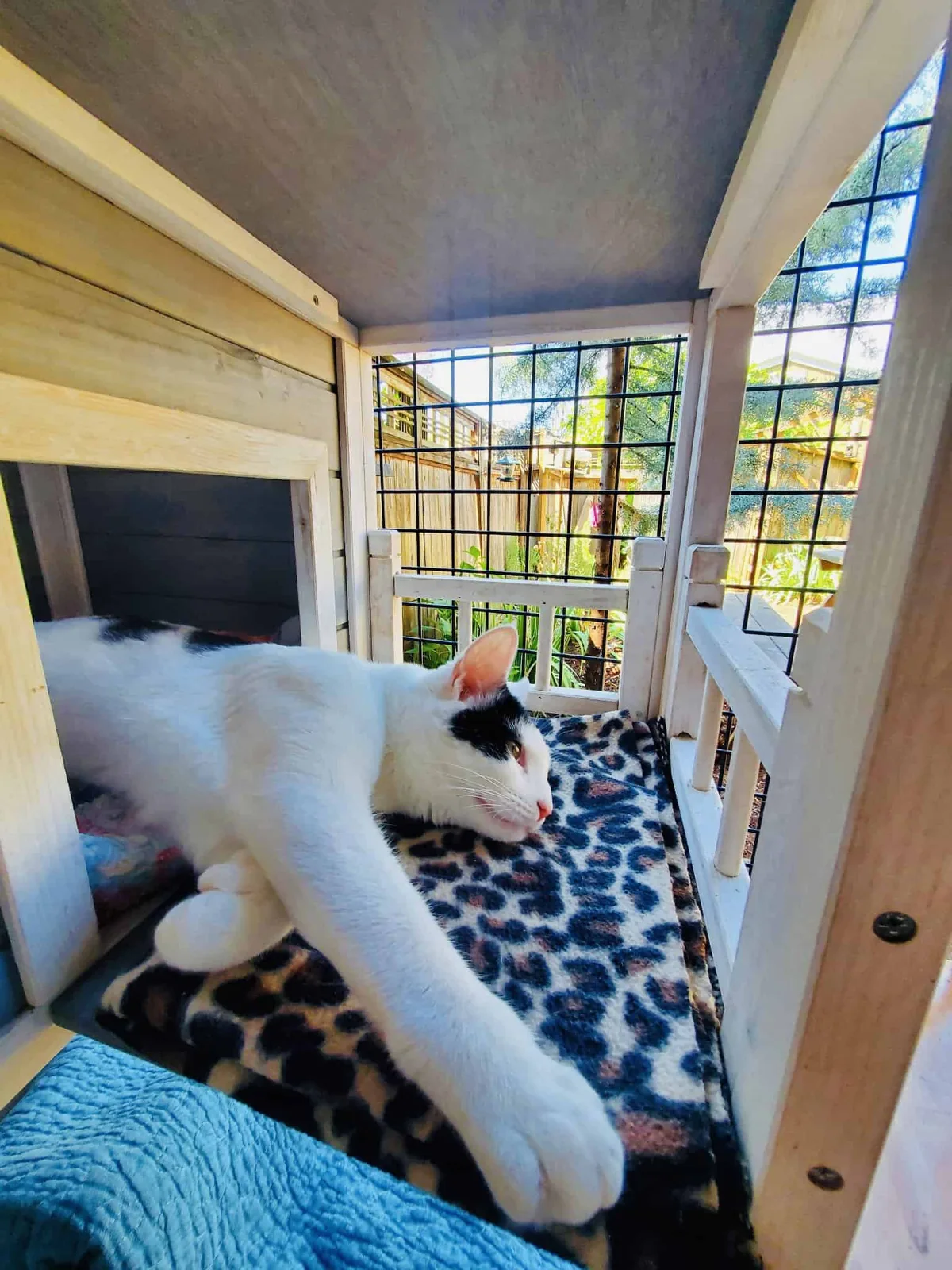
Loose limbs, soft eyes, exposed positions, stretching, and re-engagement before and after sleep differ from withdrawn immobility.
The room as a map
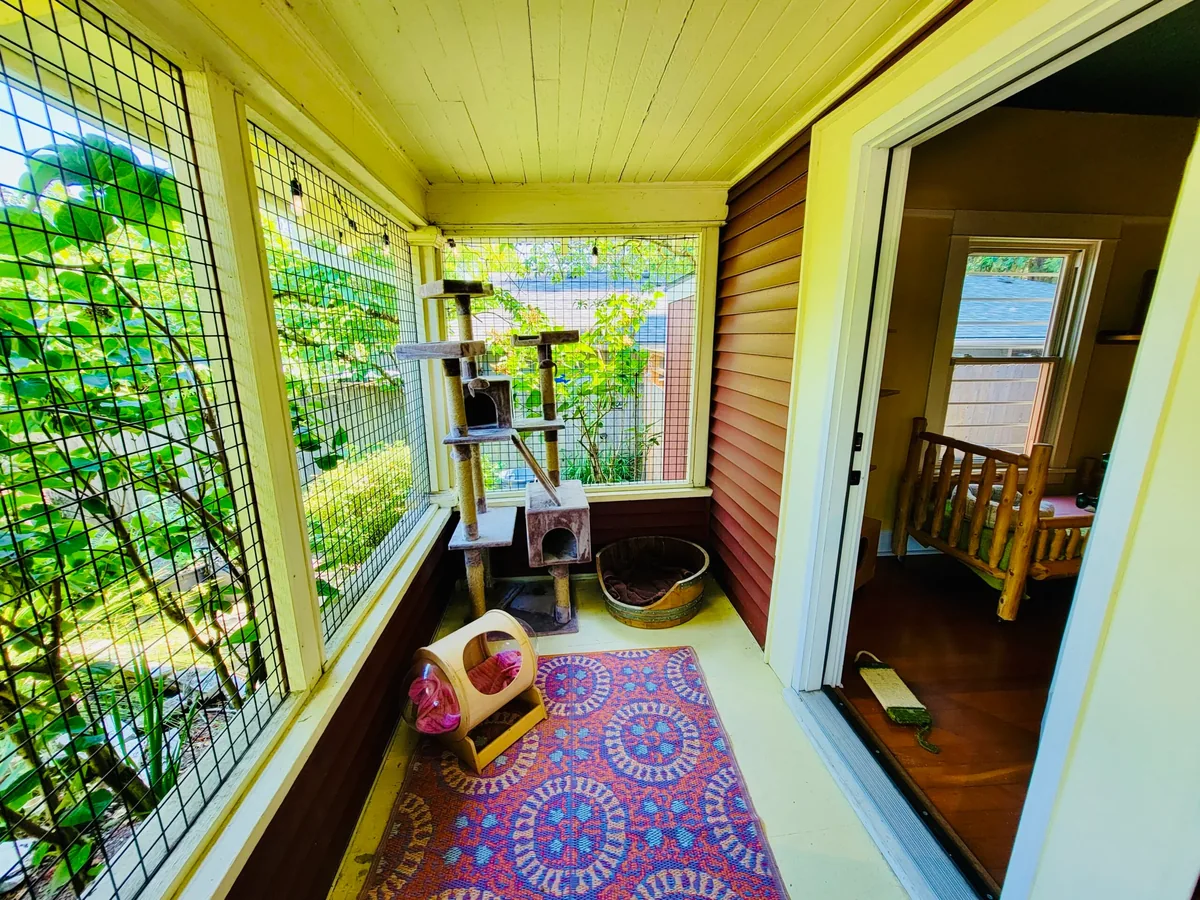
A threshold is not just a doorway. It is a place where the cat decides whether to move into exposure. A tower is not just furniture. It is a route to control. A catio is not just outdoor enrichment. It adds scent, air, distance, and observation while preserving enclosure.
Room design succeeds when the cat can move among these options without being pushed.
Belonging looks different from containment: the body softens, the cat changes position, and the room becomes usable territory.
Submit the Cats in the City request with your cat’s baseline routines, known stress signs, appetite patterns, medical needs, and room preferences.