
Environment
The room is part of treatment context
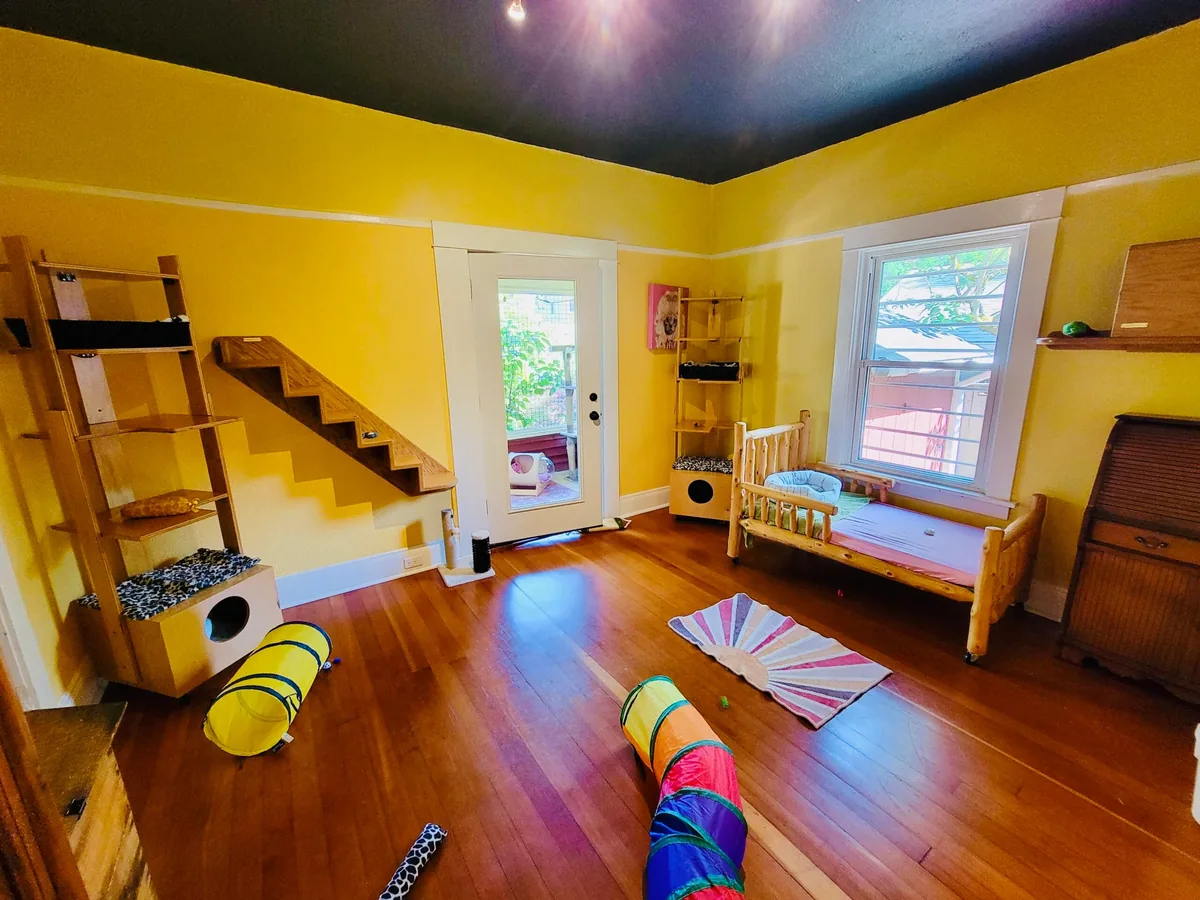
Sightlines, sound, scent, height, retreat, light, and traffic influence how much energy a cat must spend monitoring the environment.
System design
A new standard begins by rejecting the idea that boarding success means quiet containment. It asks whether the environment and care rhythm let the cat remain nourished, mobile, curious, readable, and capable of recovery.
Boarding requests, availability, current rates, and care approval are managed by Cats in the City.
Core principles
A feline boarding standard built around private territory, sensory design, observation, choice, recovery, and whole-cat stability.
Environment
Sightlines, sound, scent, height, retreat, light, and traffic influence how much energy a cat must spend monitoring the environment.
Interpretation
Stillness can reflect rest, orientation, conservation, shutdown, or fear. Posture, eyes, position, appetite, and recovery provide the context.
Choice
The ability to move higher, move away, approach, hide, observe, or decline touch helps the cat participate without losing control.
Routine
Food, medication, cleaning, lighting, interaction, and rest are organized so the cat can anticipate rather than repeatedly brace.
Response
A written schedule matters, but care also changes when appetite, elimination, mobility, breathing, or behavior diverges from baseline.
Continuity
The boarding request and follow-up thread back to Cats in the City so grooming, sitting, medical support, and future stays can share useful context.
What changes
A large room can still overwhelm a cat. A premium label can still hide a high-volume routine. The standard lives in what the cat can do inside the system.
Can the cat eat with enough continuity? Move without repeated hesitation? Rest in a position that does not require defensive guarding? Re-engage after cleaning or medication? Show curiosity without being pushed?
Those outcomes make the care environment accountable to the cat’s actual experience.
The standard is not how impressive the room looks to a person. It is how much of the cat remains available inside it.
Submit the Cats in the City request with your cat’s baseline routines, known stress signs, appetite patterns, medical needs, and room preferences.